Ivory Coast Script Font for Elegant Editorial Design
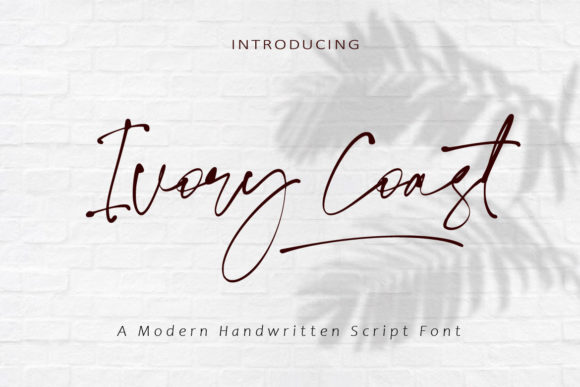
As a publisher and editorial designer who crafts digital magazines, lifestyle ebooks, and branded newsletters, I rely on Ivory Coast not just as another Script Handwritten typeface—but as a deliberate tonal anchor. Ivory Coast is a thin lettered and graceful script font, with delicate stroke contrast, subtle flourishes, and an inherent sense of poise. It doesn’t shout; it invites. That quiet confidence makes Ivory Coast ideal for projects where warmth, sophistication, and intentionality matter—especially when you’re building reader trust across blogs, printables, or premium digital Fonts.
Ivory Coast for Magazine Covers and Digital Publication Branding
When your cover is the first impression—and often the only one that matters—Ivory Coast delivers immediate distinction. Its graceful rhythm and refined thinness allow headlines to breathe without sacrificing presence. Unlike heavier scripts that can overwhelm small layouts or mobile previews, Ivory Coast scales elegantly from 48pt cover titles down to 24pt section headers in a digital magazine. Because Ivory Coast is PUA encoded which means you can access all glyphs and swashes, you can layer alternate capitals, contextual ligatures, and custom flourishes to reinforce brand voice—say, a looping “C” in “Coast” for a coastal lifestyle title, or a soft terminal swash on the final “e” in an ebook subtitle. For editorial teams maintaining visual consistency across issues, this level of typographic control transforms Ivory Coast from decoration into identity.
Ivory Coast for Ebook Titles and Chapter Openers
In long-form digital reading—whether a wellness guide, a creative writing workbook, or a seasonal recipe ebook—Ivory Coast excels where hierarchy meets humanity. Use it exclusively for titles and chapter openers, never body text: its thin lettered structure isn’t optimized for extended screen reading, but it shines as a moment of pause and emphasis. Pair Ivory Coast with a highly legible serif (like Adobe Garamond or EB Garamond) for body copy, and a neutral sans serif (such as Inter or Lato) for captions and navigation. This triad creates rhythm: elegance at the top, clarity in the middle, function at the base. And because Ivory Coast is PUA encoded which means you can access all glyphs and swashes, you can introduce subtle variation between chapters—swash “T” for “Travel,” stylized “L” for “Lifestyle”—without switching fonts or breaking licensing terms.
Ivory Coast for Newsletter Headers and Quote Graphics
Your newsletter subject line may get 3 seconds. Your header graphic? Maybe 2. Ivory Coast earns attention fast—not through boldness, but through considered grace. In email clients and web-based readers, its thin lettered silhouette reads cleanly against soft backgrounds, especially when paired with ample whitespace and muted palettes. For pull quotes embedded in blog posts or newsletter features, Ivory Coast adds emotional resonance: a handwritten warmth that signals authenticity without veering into informality. Since Ivory Coast is a thin lettered and graceful script font, it avoids the cluttered density of brush scripts—making it far more legible in constrained spaces like mobile inboxes or sidebar widgets.
Ivory Coast for Printable Guides, Workbooks, and Lead Magnets
When readers download your planner, coaching worksheet, or seasonal guide, typography becomes part of the experience—not just decoration. Ivory Coast elevates printable assets by signaling care and craftsmanship. Its ravishing style feels intentional, personal, and tactile—even in PDF form. Use it for cover titles, section dividers (“Week One,” “Your Reflection Space”), and decorative accents like page numbers or corner motifs. Because Ivory Coast is PUA encoded which means you can access all glyphs and swashes, you can build consistent visual cues: a custom ampersand, a dotted “i,” or a tapered “y” that repeats across pages. Just ensure your PDF export embeds the font properly—and verify commercial licensing covers distribution of editable templates or resellable printables.
Ivory Coast for Wedding Invitations and Elegant Branding
While Ivory Coast wasn’t designed solely for weddings, its graceful script personality aligns naturally with elevated lifestyle branding—including invitation suites, boutique packaging, and artisanal product labels. As a Script Handwritten font, it conveys intimacy without looking DIY or unpolished. Its thin lettered construction pairs beautifully with fine paper textures, foil stamping, or minimalist layout grids. For creators offering customizable wedding stationery templates, Ivory Coast offers both aesthetic cohesion and technical flexibility: PUA encoding ensures designers can swap swashes or alternates per client without manual glyph substitution—streamlining production while preserving elegance.
Ivory Coast for Blog Headers and Social Media Cover Graphics
Your blog header sets tone before a single word is read. Ivory Coast communicates refinement and approachability in equal measure—ideal for personal brands, editorial blogs, or niche content studios focused on design, wellness, or slow living. On social media cover graphics (Instagram, Pinterest, Substack banners), its graceful flow guides the eye naturally left-to-right, supporting readability even at compressed widths. Because Ivory Coast is a thin lettered and graceful script font, it avoids competing with background imagery—especially when set in light gray or off-white against textured or blurred photos. Always test legibility on mobile: keep headline size above 36px, use generous tracking, and avoid stacking multiple swash-heavy words.
Ivory Coast Font Pairing Strategies for Editorial Designers
Successful pairing starts with purpose. Ivory Coast is a display font—not a workhorse. Reserve it for moments demanding emotional weight: mastheads, quote callouts, cover art, and branded accents. Pair with a warm serif (e.g., Merriweather or PT Serif) for body copy in print or PDFs, or a highly readable sans serif (like Source Sans Pro or Recursive) for web and email. Avoid other scripts or overly decorative fonts—they dilute Ivory Coast’s impact. And remember: because Ivory Coast is PUA encoded which means you can access all glyphs and swashes, you don’t need secondary fonts for stylistic variation—just thoughtful application of its built-in alternates.
Ivory Coast Commercial Licensing for Ebooks, Newsletters, and Client Work
If you’re creating paid digital products—ebooks sold on Gumroad, branded newsletters with sponsorships, client-facing reports, or editable Canva templates—you’ll need a commercial license for Ivory Coast. Most reputable Fonts vendors include clear usage terms covering embedding in PDFs, web use via @font-face (with proper hosting), and redistribution in editable files. Confirm whether your license permits use in client deliverables—if you’re a freelance editorial designer, this is non-negotiable. Also check multilingual support: while Ivory Coast is a thin lettered and graceful script font, confirm Latin-1 coverage includes accented characters used in French, Spanish, or Portuguese publications—especially relevant for bilingual lifestyle or travel content.