Merylina: A Thin Lettered Script Font for Elegant Branding
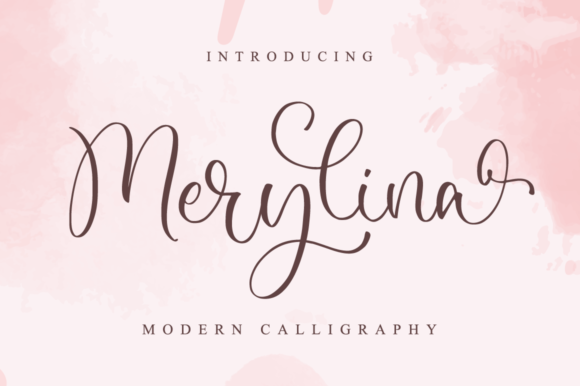
There’s something quietly magical about opening a fresh brand board and dropping in Merylina for the first time. I was midway through developing a visual identity for a small, sunlit ceramic studio—think hand-thrown mugs, minimalist glazes, and quiet craftsmanship—and needed a Script Handwritten font that felt personal but never precious. Not overly looped, not aggressively trendy, just graceful. That’s when Merylina landed on my screen: a thin lettered and graceful script font, with delicate terminals, soft contrast, and an effortless forward tilt that suggests motion without sacrificing legibility.
Merylina for Studio Logos and Handmade Brand Identity
I started with the logo lockup—testing Merylina alongside a clean, warm sans serif (we went with a slightly rounded geometric sans for balance). The Fonts pairing worked instantly: Merylina handled the studio name beautifully at 48pt on a mockup of their shop sign, while the sans carried the tagline with grounded clarity. Because Merylina is a thin lettered and graceful script font, it doesn’t dominate—it invites. It says “carefully made,” not “loudly marketed.” On business cards, it held up even at 14pt in short phrases like “Est. 2022” or “Handcrafted in Portland.” Not for body copy, of course—but as a Script Handwritten accent in logos and wordmarks? Absolutely ideal.
Merylina for Product Labels and Ceramic Packaging Design
Next came the packaging—small matte boxes for gift sets, round sticker labels for individual mugs, and belly bands for seasonal collections. Here’s where Merylina’s PUA encoding became indispensable. With full access to swashes and alternate glyphs, I swapped out standard lowercase “a” and “y” for their more lyrical variants on the front-of-box label. That subtle lift—just one or two refined characters—added texture without clutter. And because Merylina is PUA encoded which means you can access all of the glyphs and swash, I didn’t need complex OpenType panels or font managers. Just type, select, and replace—fast, intuitive, designer-friendly.
Merylina for Social Media Graphics and Instagram Story Headers
For their Instagram feed, we built a set of recurring story templates: quote cards, new collection announcements, and workshop sign-up reminders. Merylina shines here—not as a full paragraph font, but as a headline anchor. Paired with a light-weight serif for body text (think Garamond or EB Garamond), it gave warmth and intentionality to otherwise clean layouts. On mobile screens, its graceful rhythm reads clearly even at smaller sizes—as long as it’s used sparingly and purposefully. As a Script Handwritten display font, Merylina adds personality without sacrificing polish. It feels handmade, but never amateurish.
Merylina for Wedding Invitations and Elegant Branding
Later that week, a friend asked if I’d help refine her wedding stationery suite. She’d already fallen for Merylina—and rightly so. Its ravishing style suits formal yet intimate moments: think vellum envelopes, foil-stamped save-the-dates, and delicate watercolor borders. Because Merylina is a thin lettered and graceful script font, it pairs effortlessly with classic serifs (Baskerville, Playfair Display) or even restrained sans fonts (Lora, Cormorant Garamond) for hierarchy. No competing energy—just harmony. And again, those swashes? Perfect for initial caps or monogram flourishes. You don’t need ten weights or variable axes to make an impression; sometimes, one thoughtfully designed Script Handwritten font does it all.
Merylina for Website Hero Text and Editorial Design Headers
When building the studio’s website, we used Merylina only in the hero section—“Welcome to the Studio” in large, centered type over a neutral background image. It performed beautifully: elegant, human, and unmistakably intentional. For editorial design—like their monthly newsletter or printed lookbook—we reserved Merylina for section headers and pull quotes. Never for paragraphs, never for navigation. As a display font, it earns its place. As a commercial font, it’s versatile enough for digital and print, licensed for web embedding and merchandise use—no surprises, no licensing gray areas.
How to Test Merylina Before Committing to a Full Brand System
Before locking in Merylina across all touchpoints, I ran three quick checks: First, printed a test sheet at actual size—business card, label, and poster scale—to see how the thin strokes held up on uncoated stock. Second, dropped it into Figma alongside their existing brand colors and photography to gauge tonal fit. Third, typed out real phrases—not lorem ipsum—like “Limited Edition Glaze Drop” or “Workshop Registration Open.” If it felt natural saying those things, it passed. That’s the real test: Does Merylina sound like your brand’s voice?
Merylina Paired with Serif and Sans Serif Fonts for Balanced Typography
One thing I love about Merylina is how generously it plays with others. As a Script Handwritten font, it doesn’t demand attention—it shares it. Try it with a warm, low-contrast serif for body text (e.g., Adobe Garamond or Cormorant) for editorial depth. Or pair it with a friendly, open sans (like Inter or Sofia Pro) for modern clarity. Avoid other scripts or heavy display fonts—they’ll clash. But with thoughtful font pairing, Merylina becomes the soul of the system, not just the decoration.
If you’re designing for a creative studio, ceramic shop, skincare line, or any brand rooted in craft and calm, Merylina isn’t just another Script Handwritten option—it’s a considered choice. It’s the kind of Fonts investment that pays off across logos, labels, social posts, and print. Graceful, functional, and quietly confident—exactly what elegant branding needs.